Your Returns Problem isn't actually a "Returns Problem"
The most successful apparel brands no longer treat returns as an operational burden; they treat fit confidence as a strategic growth lever. Case studies from industry leaders like Fresh Clean Threads, BYLT Basics, and SwimOutlet prove that moving upstream to address fit uncertainty structurally transforms the bottom line.
DESIGN: THE ORIGIN OF MISMATCH
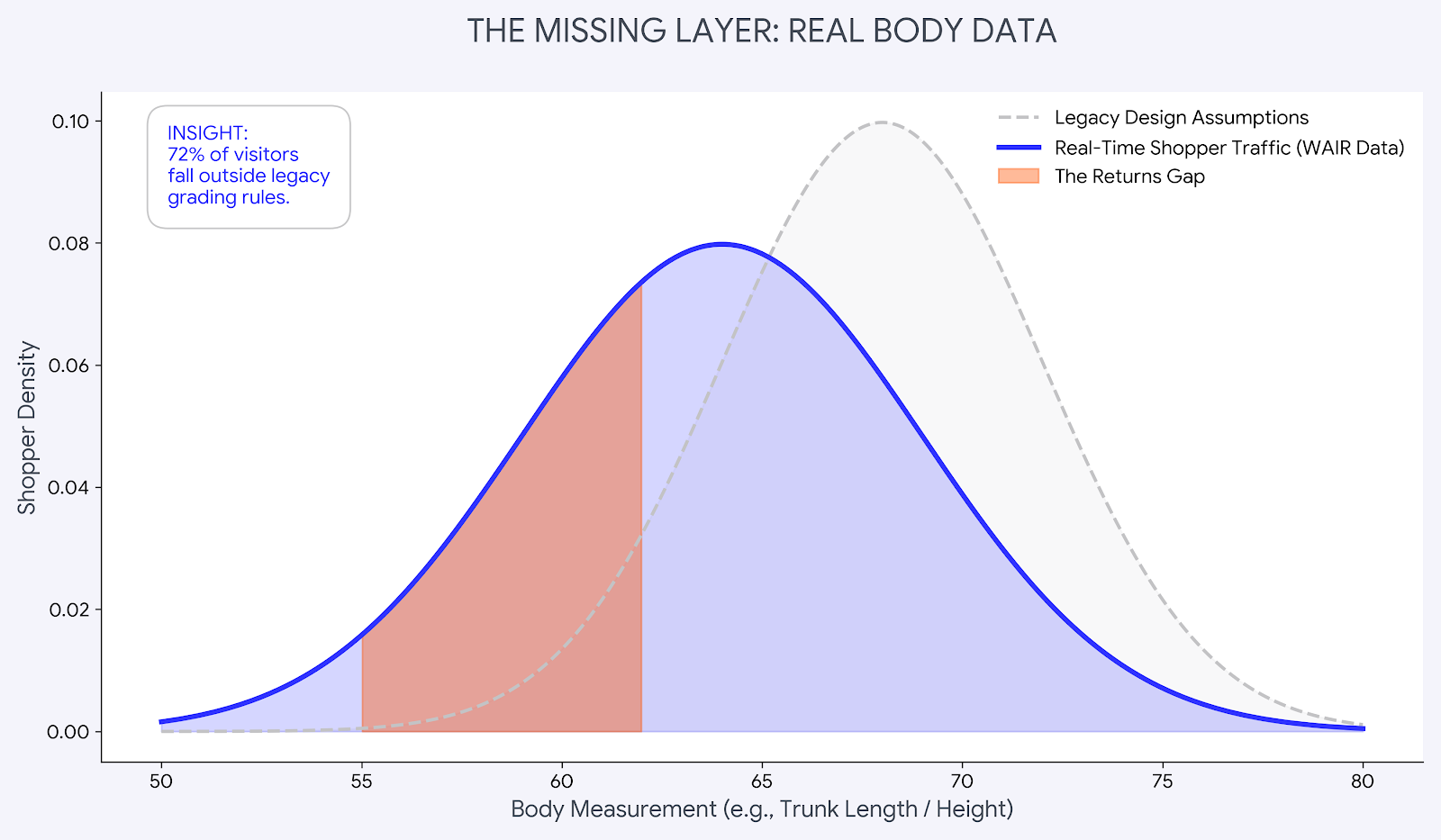
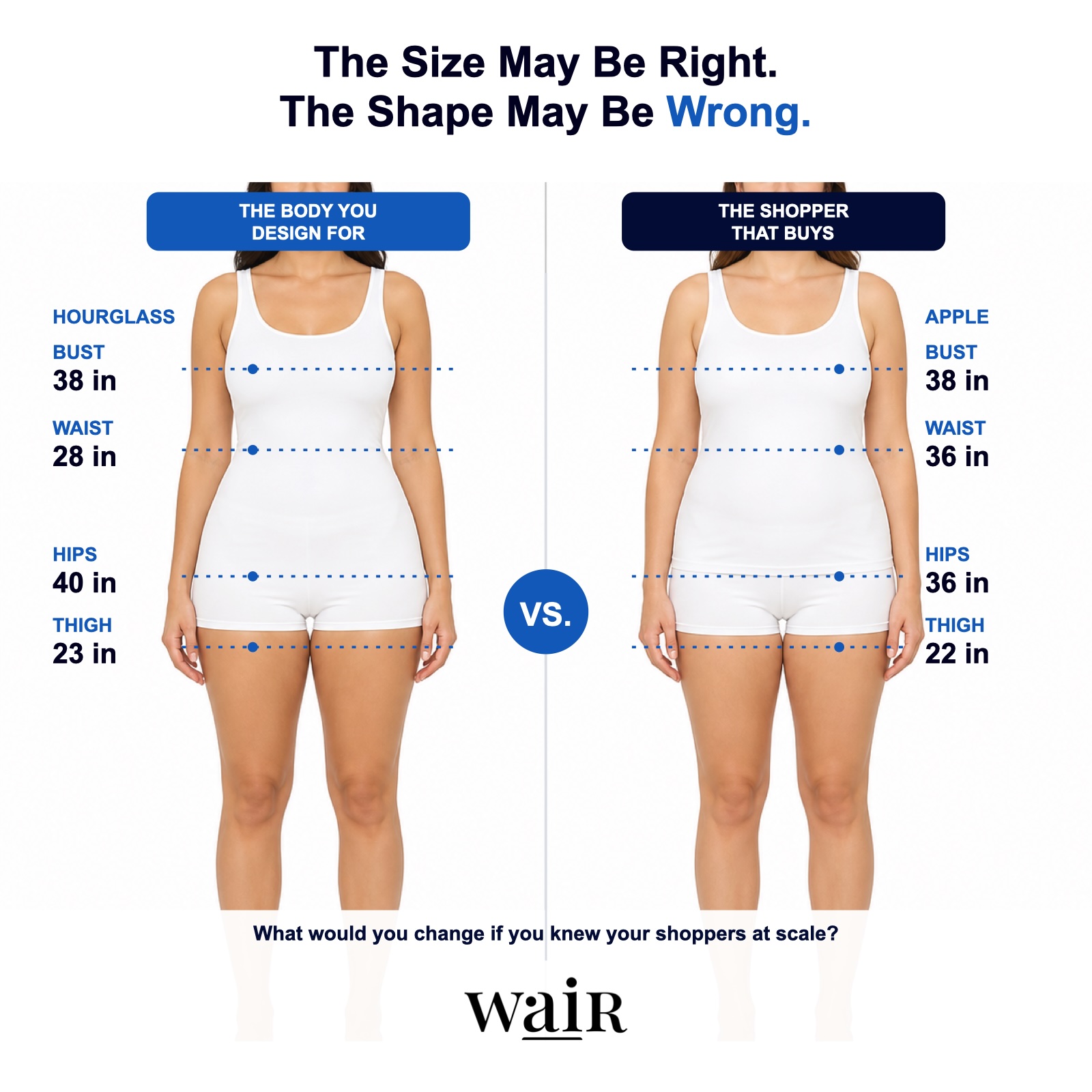
Every brand builds products around assumptions—block patterns and grading rules based on historical "average" customer data. However, human bodies are not static. When Fresh Clean Threads analyzed their proprietary WAIR dataset of over 1 million size recommendations, they discovered a "quiet mismatch": a significant cluster of shoppers under 5’8” were forced to size down just to find the right length, compromising the fit across their chest and shoulders.
By utilizing Fit Optimization 3D body data and proprietary algorithms—brands can move from gut instinct to data-validated product development. For Fresh Clean Threads, this meant launching a new "Short fit" that sold out in just four weeks.
MARKETING: AMPLIFYING THE UNCERTAINTY
Marketing's job is to create desire, but if the underlying fit logic doesn't account for real-world Shopper Body Demographics, it creates a "hope over confidence" purchase. SwimOutlet, a multi-brand retailer, faced the extreme version of this: dozens of brands with inconsistent sizing standards making shoppers hesitate at checkout.
When you align marketing with the truth of your audience's body shapes, you remove the friction that erodes margins. As SwimOutlet's CMO Alexander Sienkiewicz noted, "getting fit prediction right is challenging," but using WAIR's simple UX and backend accuracy allows shoppers to confidently choose the right size across a diverse catalog.
THE MISSING LAYER: REAL BODY DATA
Ecommerce teams often try to solve returns at the end of the funnel, but they are working with incomplete information. BYLT Basics demonstrated the power of the "Missing Layer" by comparing two years of sales data: sessions with WAIR active versus those without. The data was clear: when fit uncertainty was removed, performance surged.
With WAIR, brands integrate a continuous improvement cycle:
- Post-Purchase Fit Surveys: BYLT uses these to feed shopper feedback directly into the AI training loop, making future predictions even more accurate.
- Chatbot Integration: Automating personalized recommendations reduces sizing-related support tickets and speeds up the buying process.
- Mobile-Optimized Experience: Since 74.3% of BYLT’s traffic is mobile, WAIR’s "built for thumbs" interface ensures high engagement where it matters most.
THE STRATEGIC RESULT
The results of reducing uncertainty upstream are not just theoretical—they are material gains in top-line growth and profitability.
THE BOTTOM LINE
Returns are not the disease; they are the signal. Your returns problem starts at design assumptions and is amplified by marketing misalignment.
To fix returns sustainably, follow the lead of BYLT, SwimOutlet, and Fresh Clean Threads:
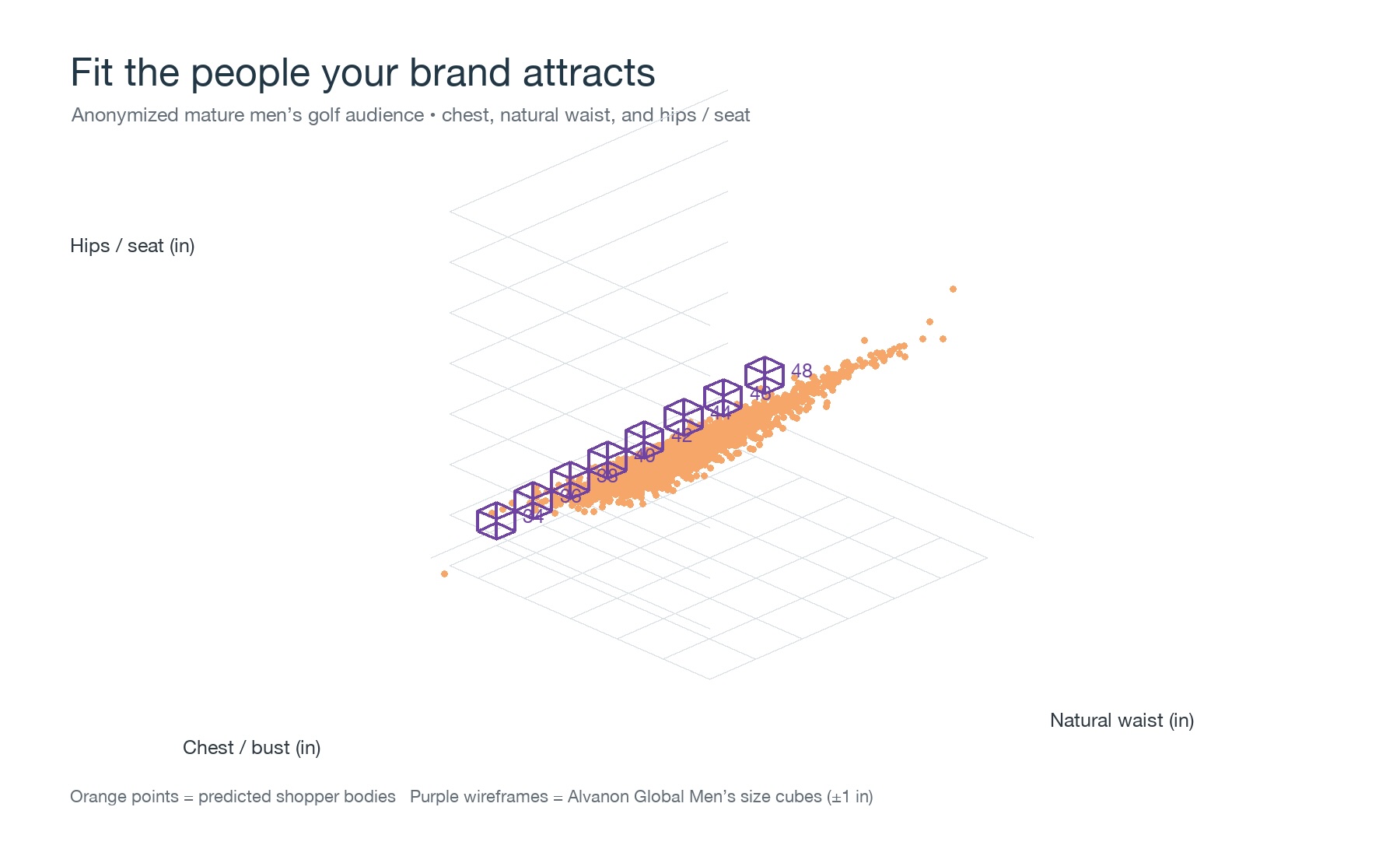
- Look at the actual bodies coming to your site.
- Align design with reality to capture underserved segments.
- Reduce uncertainty before checkout to boost shopper confidence.
When uncertainty decreases upstream, returns decrease downstream, and fit confidence becomes your most powerful growth lever.


Want to be notified of our newest episodes?
Subscribe to our Podcast!