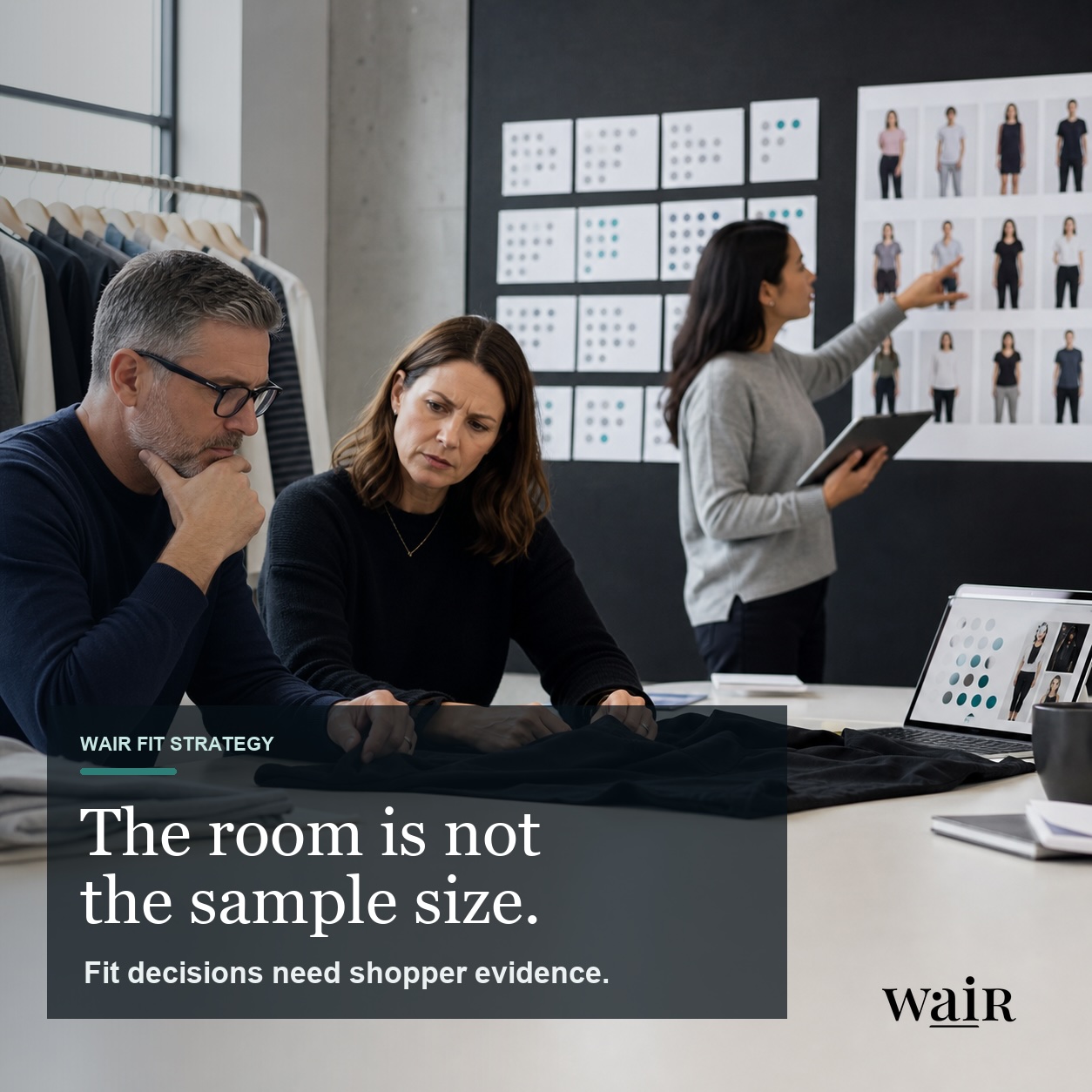
Don't Let C-Suite Fit Preferences Dictate Shopper Fit
Fit is personal.
That is what makes apparel so difficult to sell online.
Every shopper brings their own body, history, preferences, and expectations into the buying journey. They know what size they usually wear. They know whether they like a closer fit or a looser fit. They also know how frustrating it feels to buy two sizes, wait for delivery, try both on, and send one back.
But there is another side to this problem that does not get talked about enough.
Fit is personal for the people inside the brand, too.
Executives, merchants, ecommerce leaders, product teams, designers, and customer experience teams all have bodies. They all have fit preferences. They all have opinions about what a product "should" feel like.
Those opinions can be useful. They can reflect years of brand experience, product knowledge, and customer conversations.
But they can also become risky when they start standing in for shopper evidence.
We saw a version of this recently while reviewing size recommendations with an apparel team. A few senior leaders looked at a recommendation and felt it was wrong because it did not match how they personally expected the product to fit.
Their reaction was understandable.
If you are used to wearing one size, and a recommendation engine suggests another, it is natural to question the system. Especially if you know the product well.
But once the team looked at actual shopper behavior, the picture changed.
The shoppers who were being recommended that size, saying the fit was right, and keeping the product did not necessarily look like the executives in the room.
That is the important lesson.
The question is not, "Would I wear this size?"
The better question is, "Which shoppers are actually buying this product, liking the fit, and keeping it?"
That shift matters because a brand can accidentally tune its fit experience around internal preference instead of customer outcomes.
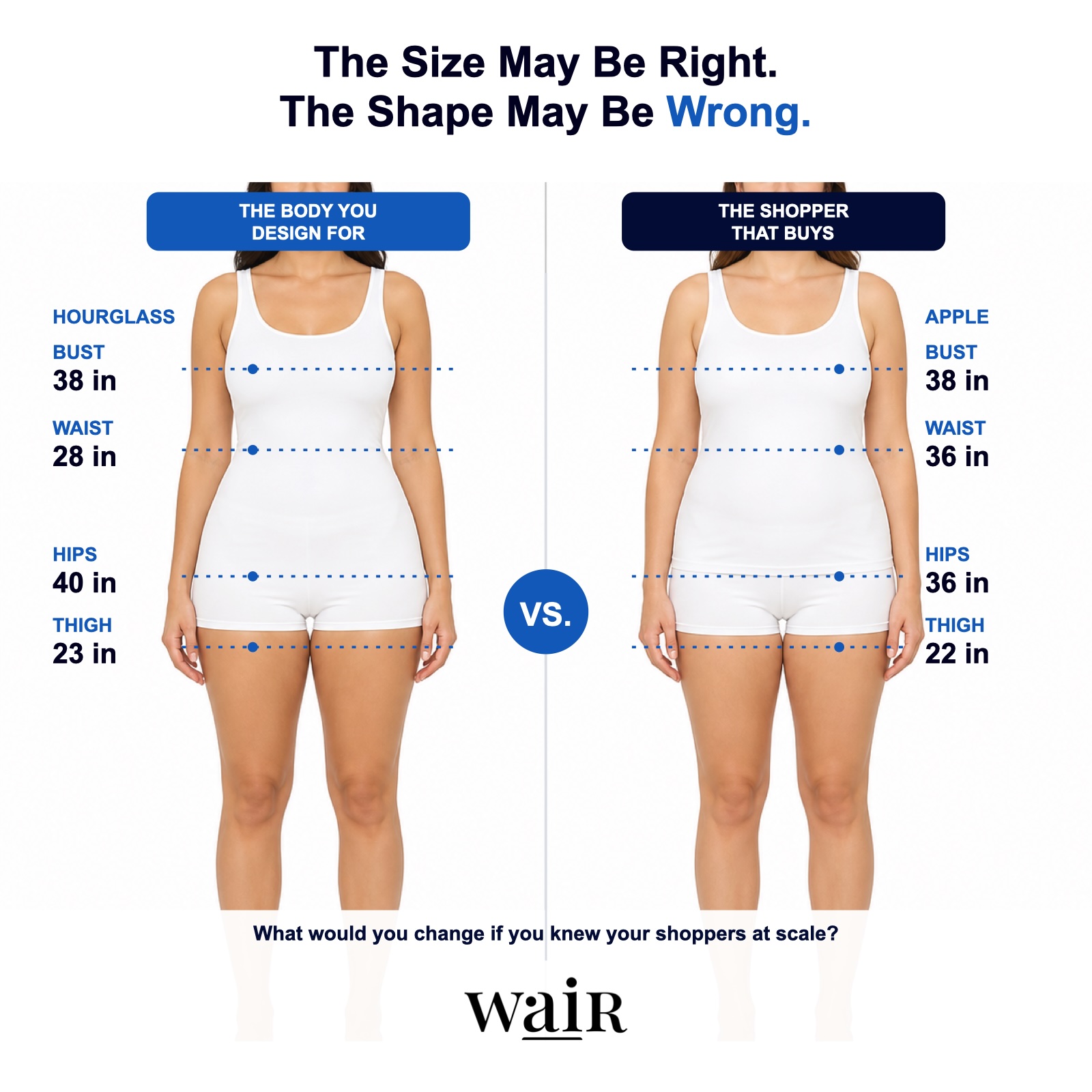
A leader may prefer a tighter fit. A merchant may know the legacy size chart by heart. A product team may be anchored to how the sample fits one model. All of those inputs matter, but none of them should be treated as the full customer picture.
Online shoppers are not standing in the room.
They are in different homes, with different bodies, different fit preferences, and different levels of confidence before checkout.
If the digital sizing experience does not account for that reality, the business impact shows up quickly. Shoppers hesitate. They buy multiple sizes. They choose the wrong size. They return products that could have been kept.
This is why size recommendations should not be viewed only as a conversion feature.
The recommendation helps the shopper make a better decision in the moment. That matters. But the data behind the recommendation can help the business make better decisions over time.
Which shoppers are being recommended each size?
Which shoppers are accepting the recommendation?
Which shoppers say the fit was right?
Which products create the most sizing uncertainty?
Which size recommendations turn into kept purchases?
Which returns suggest a product, size chart, or fit-expectation issue?
Those questions are difficult to answer with a static size chart or a few internal try-ons. They are easier to answer when shopper body data, product context, fit feedback, purchase behavior, and return outcomes are connected.
For ecommerce leaders, this can identify where fit uncertainty is creating friction on the path to purchase.
For merchandising leaders, it can reveal whether the size curve reflects the shoppers who are actually showing up for a product.
For customer experience leaders, it can help separate shopper confusion from product fit issues.
For executives, it creates a better operating question:
Are we making fit decisions from shopper evidence, or from the bodies in the room?
Internal fit opinions should not be ignored. They are part of the conversation.
But they should be treated as one input, not the source of truth.
The source of truth should be the shoppers you are trying to serve.
That is where WAIR can help. WAIR's size recommendations support shoppers at the point of decision, and the shopper data behind those recommendations can help apparel teams understand how fit affects conversion, returns, and retained revenue.
If your team is reviewing fit, returns, size curves, or PDP performance, start with one product.
Look at what your team believes.
Then look at what your shoppers are doing.
The gap between those two views may be where the opportunity is hiding.
Fill out the WAIR lead form if you want to see what shopper-fit evidence could reveal for your products.


Want to be notified of our newest episodes?
Subscribe to our Podcast!