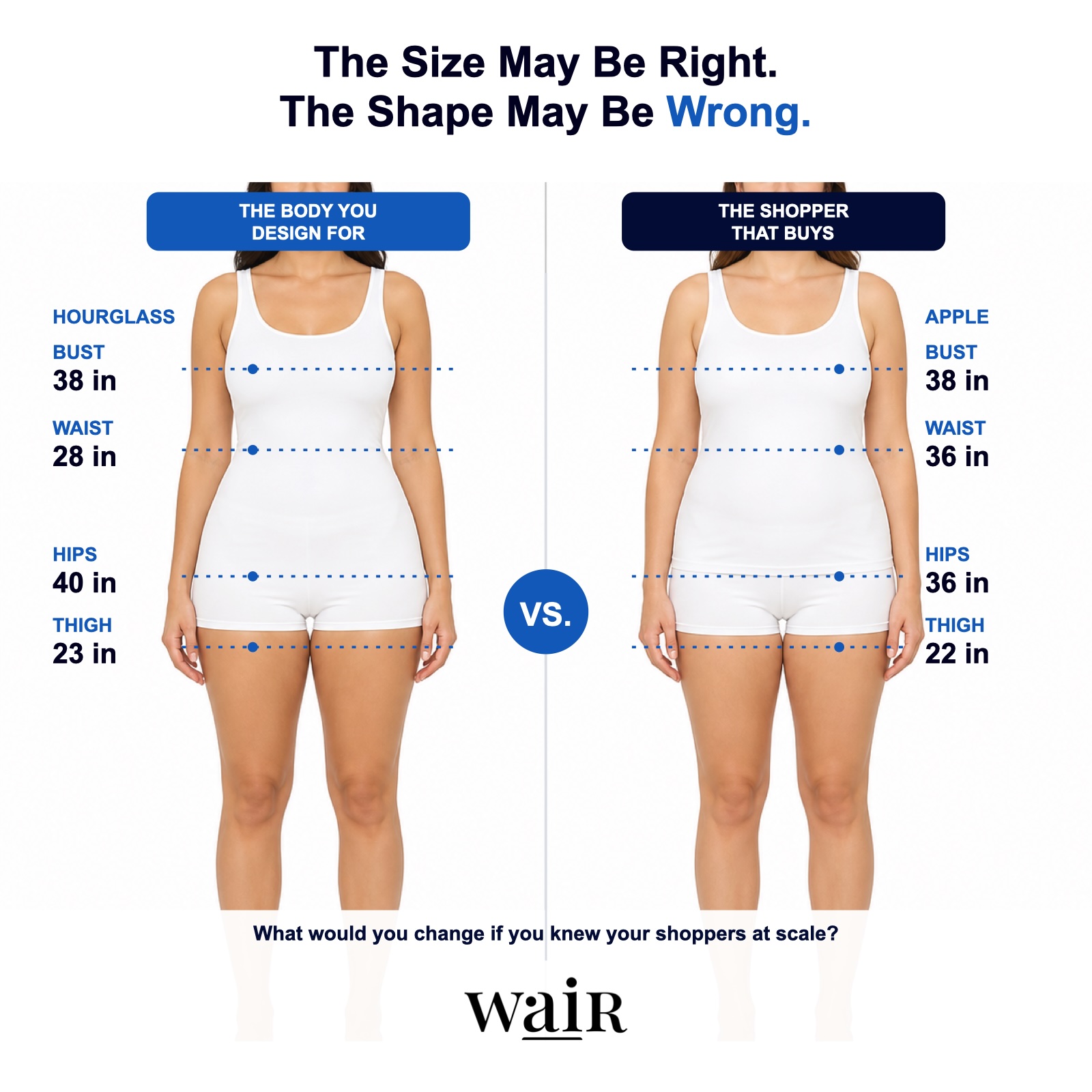
The Size May Be Right. The Shape May Be Wrong.
Most apparel fit conversations begin with a familiar question:
What size should this shopper buy?
That is an important question. It is also a fairly narrow one.
Sometimes the shopper is not choosing the wrong size. The garment is simply not built for the shape of the shopper wearing it.
Imagine a brand developing a product around an hourglass fit form when most of its shoppers are apple-shaped, triangle-shaped, inverted-triangle-shaped, or pencil-shaped.
Those shoppers can move up or down in size. They can consult the size chart. They can buy two sizes to compare. But if the proportions of the garment do not align with the proportions of their bodies, changing the size may not solve the problem.
The problem is not necessarily the shopper. It may be a body-shape mismatch.
The data many brands are missing
Most technical design teams have strong expertise in fit, construction, and grading. They also work with the information available to them: fit forms, historical sales, customer feedback, returns, and perhaps a body-sizing survey conducted years ago.
Those inputs can be valuable. But they may not tell a brand what the body shapes and measurements of its current e-commerce shoppers look like at scale.
A survey is a sample. A fit form is an assumption about the customer the brand wants to serve. Historical sales show what sold within the products, sizes, and inventory that were available.
None of those inputs necessarily answers a basic operating question:
What do the people shopping our products actually look like?
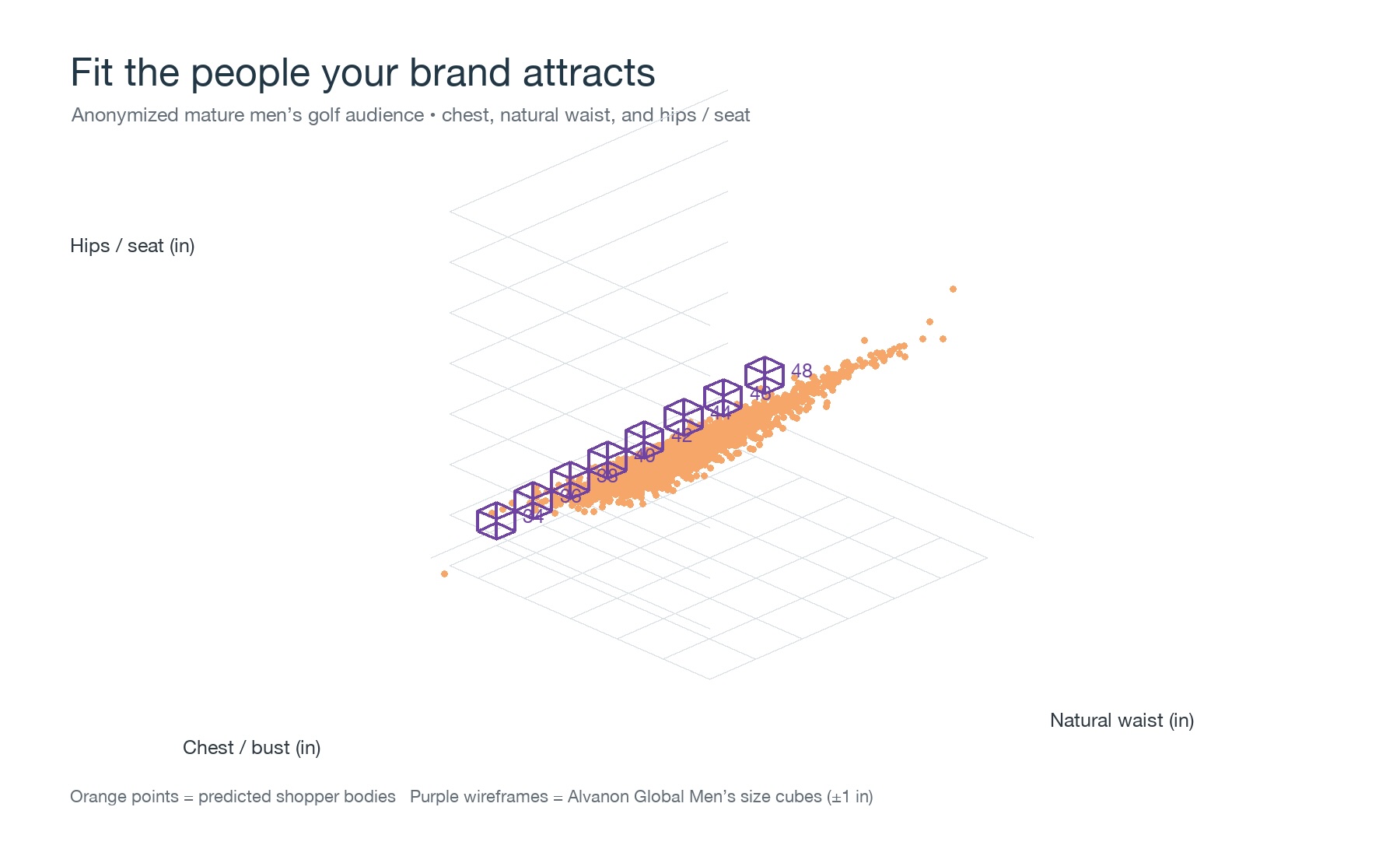
WAIR's size recommendation experience creates an opportunity to ask that question more directly. From shopper inputs, WAIR can predict body dimensions and classify body-shape patterns such as hourglass, apple, triangle, inverted triangle, and pencil. Those insights can be viewed in aggregate alongside product, purchase, return, review, and inventory context.
The shopper sees a recommended size. The brand may be able to see a much larger pattern.
What would you change?
If you knew the body shapes and measurements of your shoppers, what would you do differently?
- Would you change the core fit form?
- Would you change the grade rules so that each size maintains the proportions your shoppers actually have?
- Would you offer a different silhouette or fit category?
- Would you change how you describe the garment on the product page?
- Would you use different models or show the product on more body shapes?
- Would you change the audience you target in marketing?
- Would you investigate certain products differently when returns are concentrated among a particular body-shape pattern?
These are not questions a size recommendation alone can answer. They require a broader view of the shopper.
Fit is a business problem
Fit is often treated as a technical design issue. In reality, several teams pay for the consequences of fit decisions.
Technical design sees the garment. Merchandising sees the assortment and size curve. e-ccommerce sees conversion friction. Marketing decides who receives the message. Customer service hears the complaints. Operations processes the returns. Finance sees the margin impact.
When each team sees only its portion of the problem, the business can spend a lot of time treating symptoms. It can improve the size chart, add more product photography, offer more promotions, and process more returns without asking whether the product was designed around the right customer in the first place.
The goal is not to replace technical designers or formal fit testing. The goal is to give those teams a better understanding of the population they are designing for.
Size recommendation is only the beginning
Size recommendation helps a shopper choose from the product that exists.
Body-shape intelligence can help a brand ask whether the product, fit, and audience are aligned before the next purchase, return, or product launch.
That could mean changing a fit form. It could mean adjusting grade rules. It could mean offering a new silhouette. It could mean communicating fit more honestly. It could mean showing the product on the bodies most likely to buy it.
The biggest opportunity may not be reducing a return after the garment has already been made and shipped. It may be preventing the mismatch before the garment reaches the shopper.
The question for technical designers, merchandisers, and marketers is straightforward:
What would you change if you knew the body shapes and measurements of your shoppers at scale?


Want to be notified of our newest episodes?
Subscribe to our Podcast!