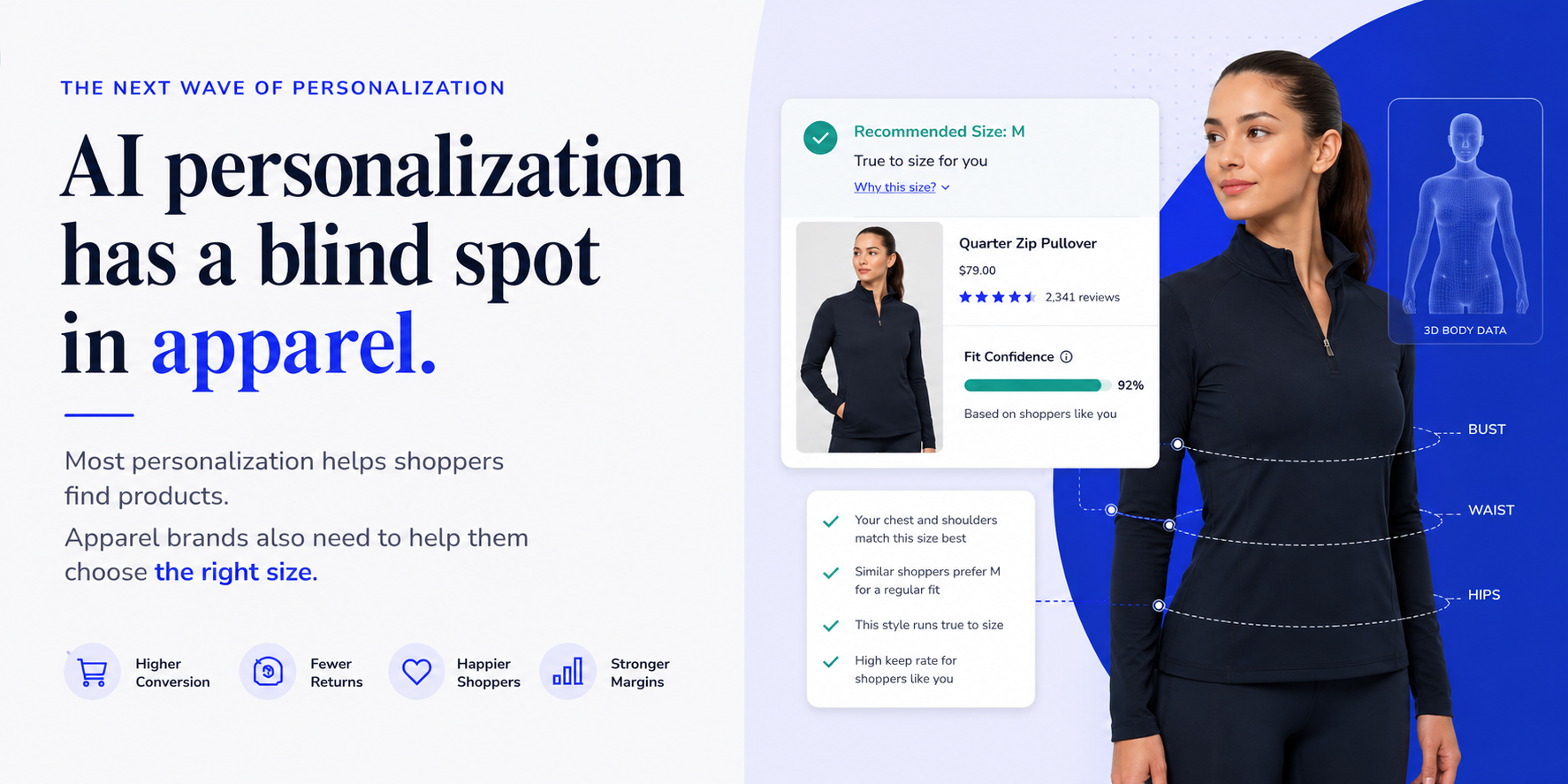
AI Personalization Has a Blind Spot in Apparel
AI Personalization Has a Blind Spot in Apparel
There has been a lot of conversation lately about AI personalization in retail, and I think most of it is directionally right. Retailers should be using AI to make shopping experiences better. They should be using customer data to make smarter recommendations. They should be helping shoppers find products faster, discover relevant styles, and see merchandise that feels more tailored to them.
But in apparel, I think there is a blind spot.
Most ecommerce personalization is still focused on one primary question: what should this shopper see next?
That question matters. If someone is shopping for a new pair of pants, a dress, a swimsuit, or a button-down shirt, it is helpful to show them products that match their style, preferences, price range, and past shopping behavior. Product discovery is important, and AI can absolutely make that experience better.
But apparel has a second question that is often more important.
Once the shopper finds the product they want, they still have to answer: what size should I buy?
That is where apparel is different from so many other ecommerce categories. A shopper can love the product, want the product, and have every intention of buying it, but still hesitate because they are not sure how it will fit. That hesitation is not theoretical. It shows up as abandoned carts, support questions, size bracketing, exchanges, returns, and lost margin.
This is why I believe the next wave of apparel personalization cannot stop at product discovery. It has to extend into purchase confidence.
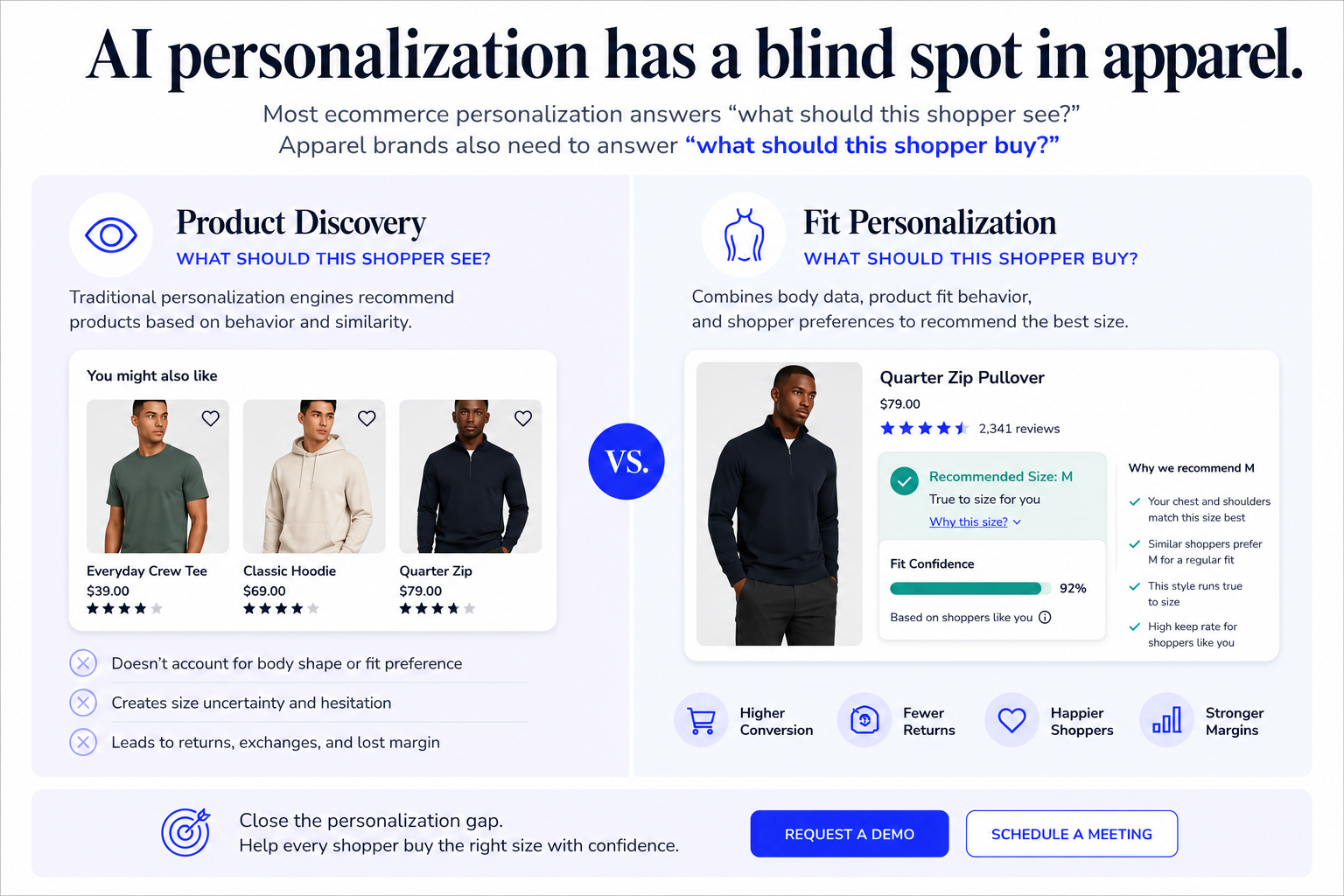
A recommendation engine might get someone to the product page. But that does not mean the shopper is ready to buy. The moment of truth in apparel often happens after product discovery, when the shopper is staring at the size selector and trying to decide between small and medium, 6 and 8, 32 and 34, regular and tall, slim and relaxed.
That decision is personal because bodies are personal.
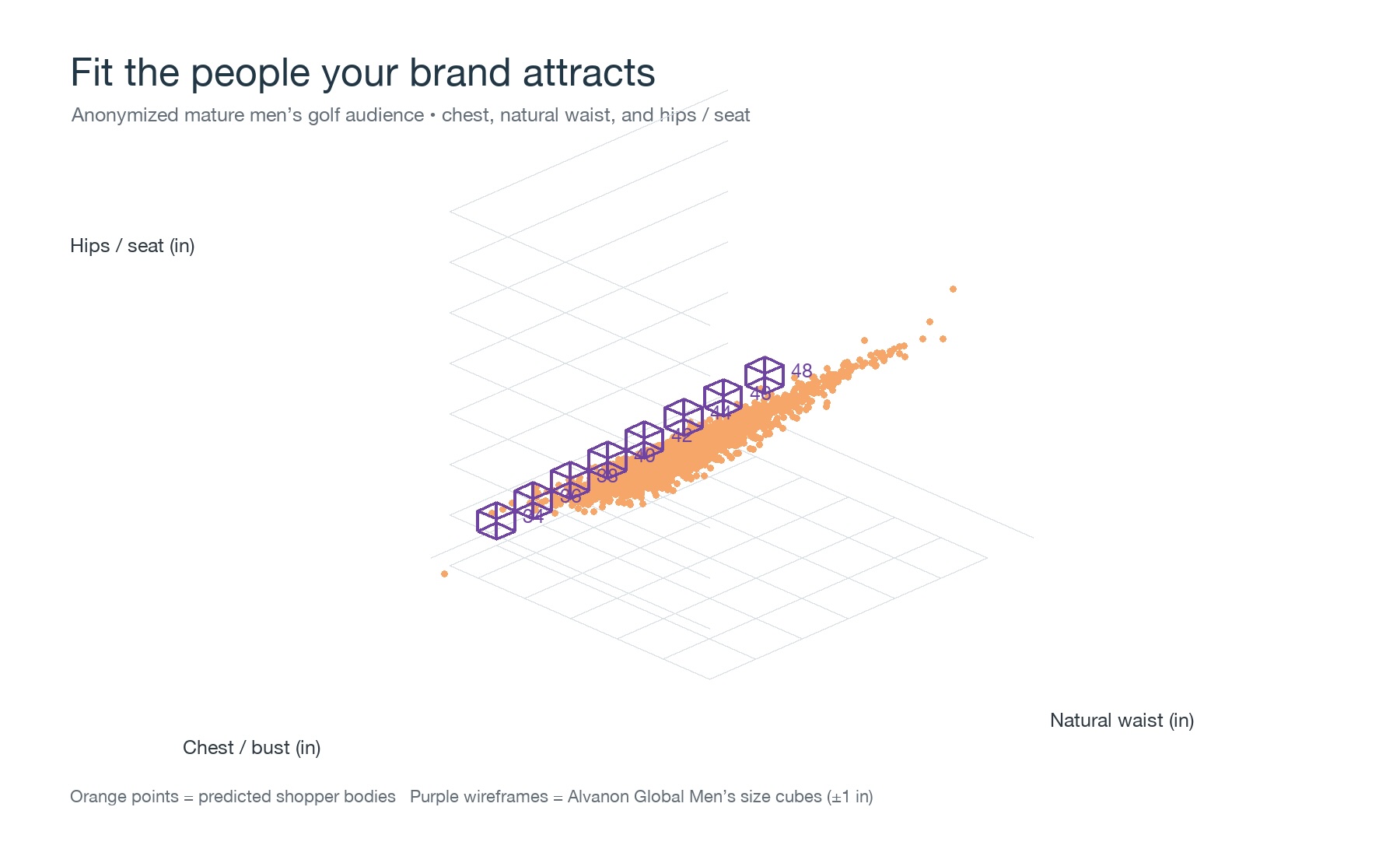
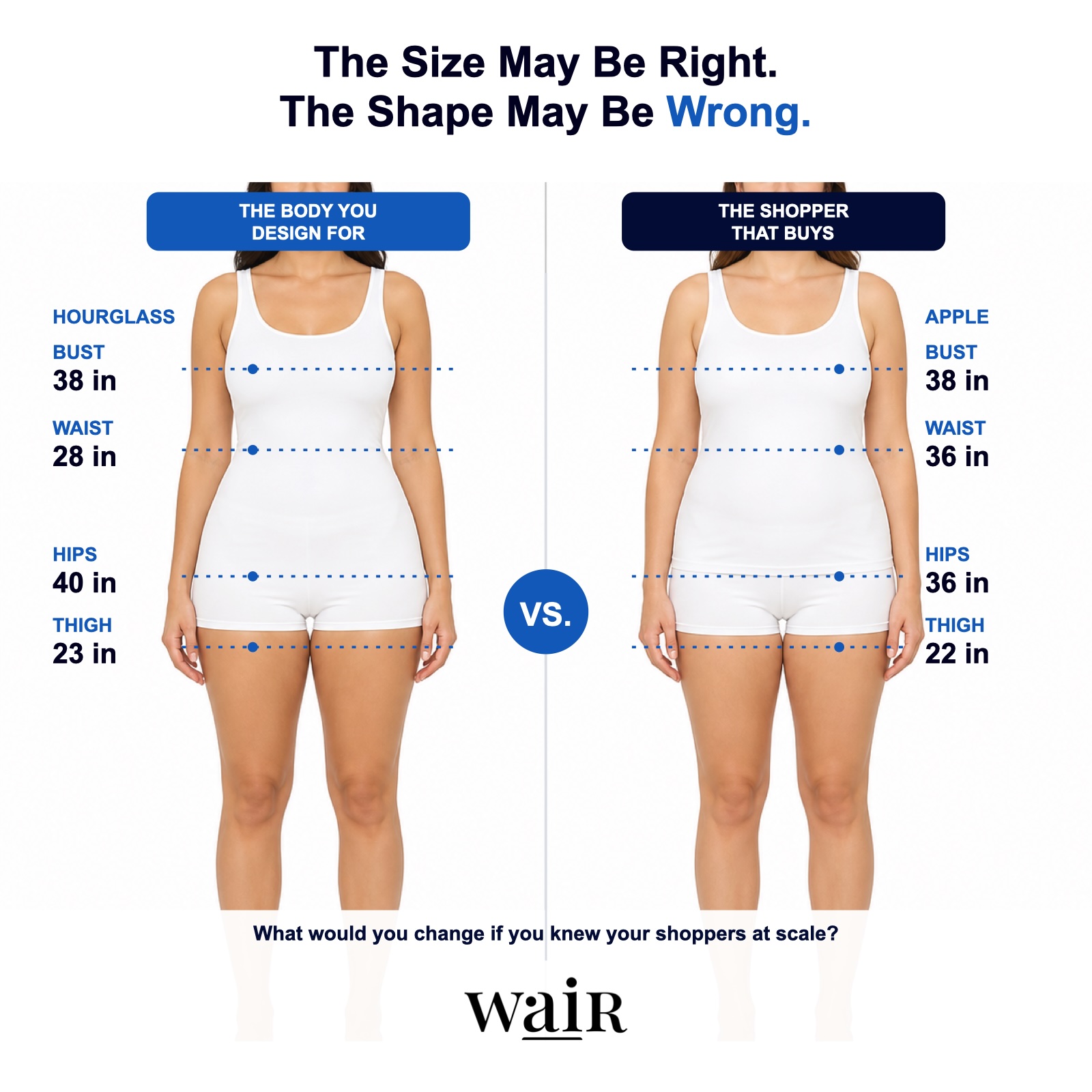
Two shoppers can be the same height and weight and still need different sizes. They can have different body shapes, different proportions, different fit preferences, and different expectations for how the garment should feel. One shopper may want a tighter fit. Another may want something more relaxed. One may carry weight through the chest. Another may carry it through the hips. One may be confident in the brand’s sizing. Another may have been burned by inconsistent fit in the past.
Traditional personalization does not fully account for that.
It may know what a shopper clicked. It may know what they bought last time. It may know which products are popular with similar customers. But in apparel, that is not always enough. The shopper does not just need to know what product is relevant. They need to know whether that product is going to fit their body the way they want it to fit.
That is the gap WAIR is built to close.
WAIR brings personalization into the purchase decision itself. We combine shopper body data, product-level fit behavior, fit preferences, and post-purchase feedback to help shoppers choose the right size with more confidence. The goal is not just to recommend a size. The goal is to reduce uncertainty at the exact moment where uncertainty can prevent a sale or create a return.
This is also why fit personalization is not only a shopper experience issue. It is a business issue.
When shoppers are unsure, they hesitate. When they hesitate, conversion suffers. When they guess, returns increase. When they order multiple sizes to try at home, margin gets hit before the return even arrives at the warehouse. By the time the return shows up in reverse logistics, the problem already started much earlier, on the product page.
That is why I do not think of returns as only a post-purchase problem. In apparel, many returns begin before checkout. The shopper was unsure. The size chart did not give them enough confidence. The fit language was too vague. The product ran differently than expected. The shopper guessed because they had no better option.
Better fit guidance can change that.
And the opportunity goes beyond the individual recommendation. Every purchase, return, exchange, review, and fit survey can become a signal. Over time, those signals help brands understand which products are creating fit confusion, which sizes are over or under-performing, which shoppers are underserved, and where fit is helping or hurting profitability.
That is where fit personalization becomes much bigger than a size recommendation widget.
It becomes a feedback loop.
It helps the shopper make a better decision today, and it helps the brand make better decisions tomorrow.
This is the part of AI personalization that I think apparel brands should be paying much more attention to. Personalization should not only be about showing the shopper more products. It should be about helping the shopper buy the right product, in the right size, with the right expectation.
The future of apparel personalization needs to be body-aware, product-aware, and outcome-aware.
Body-aware because fit starts with the shopper.
Product-aware because every garment fits differently.
Outcome-aware because the system should learn from what happened after purchase.
That is how apparel personalization moves from “you might also like this” to “this is the right choice for you.”
And to me, that is the real opportunity.
AI personalization in apparel should not just answer: what should this shopper see?
It should help answer: what should this shopper buy?
Right product. Right size. Right fit expectation. More confidence. Fewer preventable returns.
That is where personalization gets real.


Want to be notified of our newest episodes?
Subscribe to our Podcast!