Still Using Size Charts? It’s Killing Your Business
Still Using Size Charts? It’s Killing Your Business.
Size charts were designed to solve a real problem: help shoppers choose the right size before they buy.
But for most apparel brands today, size charts are not solving the problem. They are quietly making it worse.
Let’s start with the basic premise of a size chart.
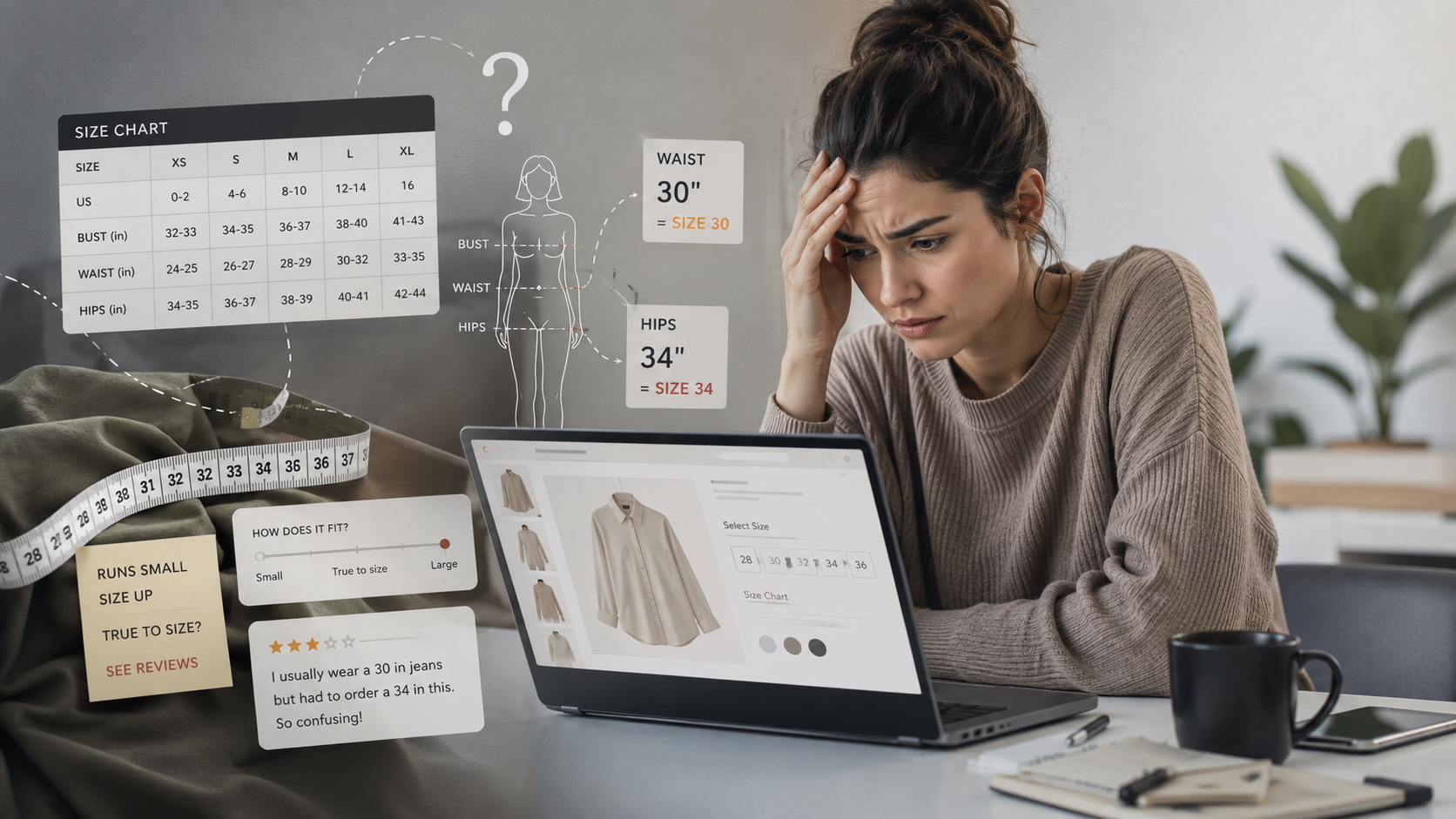
You are expecting your customer to have a tape measure. You are expecting them to know where and how to measure their body. You are expecting them to measure themselves accurately. You are expecting them to understand the difference between body measurements and garment measurements. You are expecting them to interpret your technical design team’s pattern block logic. Then you are expecting them to compare those numbers to a chart and confidently choose a size.
That is a lot to ask from someone who just wants to buy a pair of pants, a dress, a hoodie, or a jacket.

And even when a shopper does everything “right,” the size chart often still fails them.
What happens when their waist measurement points to a size 30, but their hips point to a size 34? What happens when their chest fits a medium, their shoulders fit a large, and their arms fit a small? What happens when one brand tells them they are a small, another says medium, and another says large?
Most shoppers do not know what to do.
So they guess.
And guessing is expensive.
Some shoppers buy multiple sizes with the intention of returning the ones that do not fit. Others abandon the purchase altogether. Some buy the wrong size, receive a product that does not fit, lose confidence in the brand, and send it back. Others keep the product but never buy from you again.
Size charts create friction at the exact moment your shopper is trying to make a decision.
That friction impacts conversion.
It increases return rates.
It damages customer confidence.
And over time, it erodes profitability.
The problem is not that size charts are useless. The problem is that size charts put too much responsibility on the shopper. They are a static tool trying to solve a dynamic, personal problem.
Bodies are not static. Fit preference is not static. Garments are not static. Fabric stretch, silhouette, product category, brand grading, shopper expectations, and brand fit intent all matter.
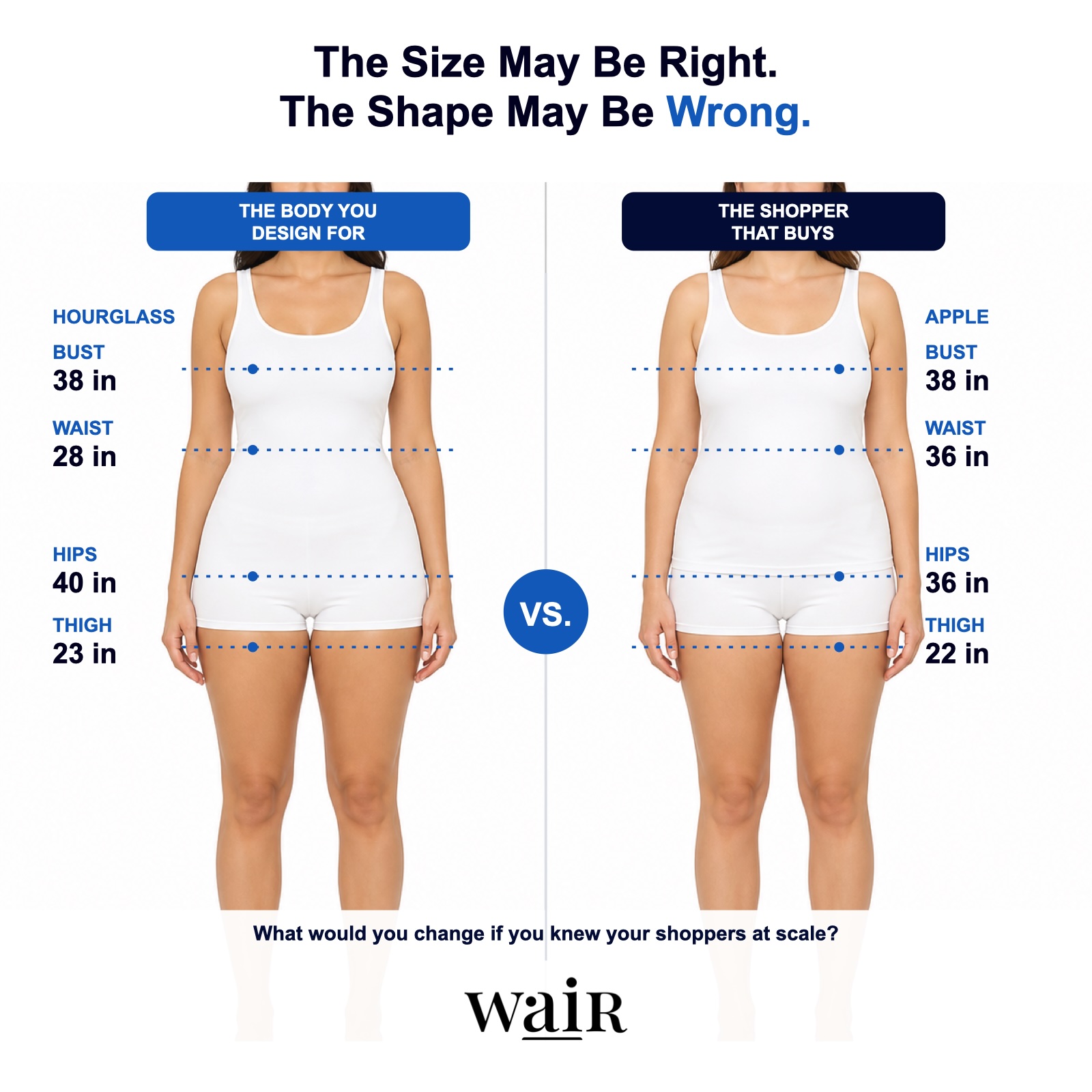
A shopper’s “best size” is not determined by one measurement. It is determined by the relationship between their body, the garment, the brand’s fit intent, the shopper’s own fit preference, and what similar shoppers actually kept or returned.
That is why size charts fall short.
They provide information, but they do not provide a recommendation. It is like data without insight. It gives the shopper numbers, but still forces them to do the work.
And shoppers do not just need information.
They need confidence.
A traditional size chart says: “Here are the measurements. Figure it out.”
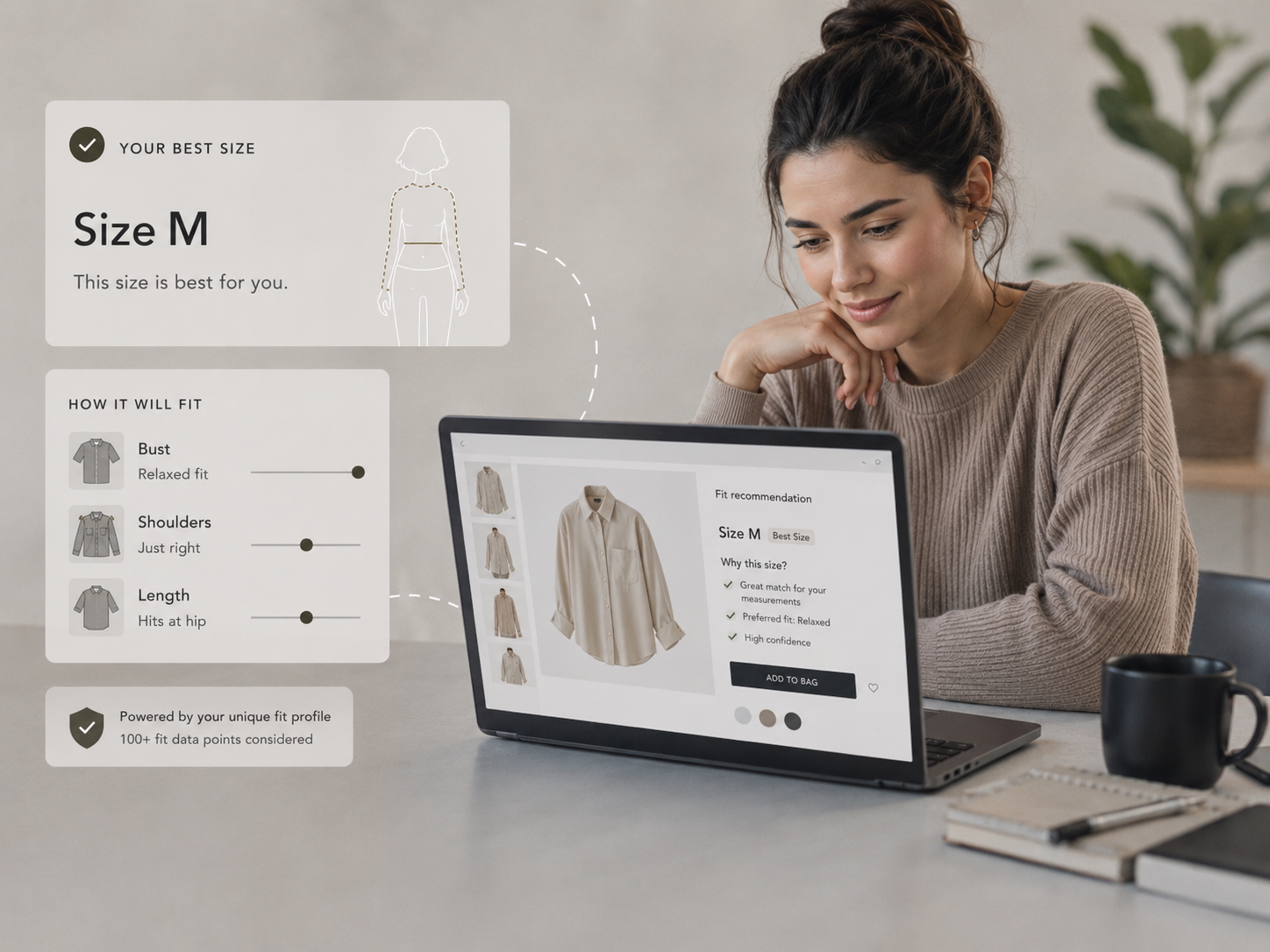
A smarter fit experience says: “Based on you, this product, and real shopper outcomes, this is the size we recommend, and here is how it will fit you.”
That shift matters.
When a shopper receives a personalized size recommendation, the buying experience changes. They feel guided rather than left alone. They are more likely to complete the purchase. They are less likely to buy multiple sizes. They are less likely to return the product because of fit. And they are more likely to trust the brand the next time they shop.
For apparel brands, this is not just a customer experience issue. It is a business performance issue.
Returns are not simply a logistics problem. They are a margin problem. Every fit-related return creates costs across shipping, processing, inventory handling, customer service, markdown risk, and lost future revenue. Even when a returned item comes back in sellable condition, the profit damage is already done.
Meanwhile, size uncertainty suppresses demand before it ever becomes a sale. Many shoppers who are unsure about fit do not convert. They do not show up in your return data because they never purchased in the first place.
That is the hidden cost of relying on size charts.
You see the returns.
You may not see the abandoned carts, the lost confidence, the shoppers who considered buying but decided it was too risky, or the customers who ordered once and never came back.
The brands that win in apparel over the next decade will not be the ones with slightly prettier size charts or longer fit guides. They will be the ones that remove size uncertainty from the buying journey.
That means moving from static charts to intelligent recommendations. It means using shopper data, product data, body prediction, fit preference, and real outcome feedback to help every customer choose the size most likely to work for them.
Size charts are old-world retail thinking. They belong to an era when brands had fewer options and shoppers had fewer expectations.
But ecommerce has evolved.
Your fit experience should evolve too.
It is time to give shoppers tools that create confidence, accuracy, and value, not extra homework.
Your shoppers do not want to measure, compare, interpret, guess, and hope.
They want help.
And if your brand is still relying on static size charts as the primary way shoppers choose a size, those charts are not protecting your business.
They are slowly killing it.


Want to be notified of our newest episodes?
Subscribe to our Podcast!