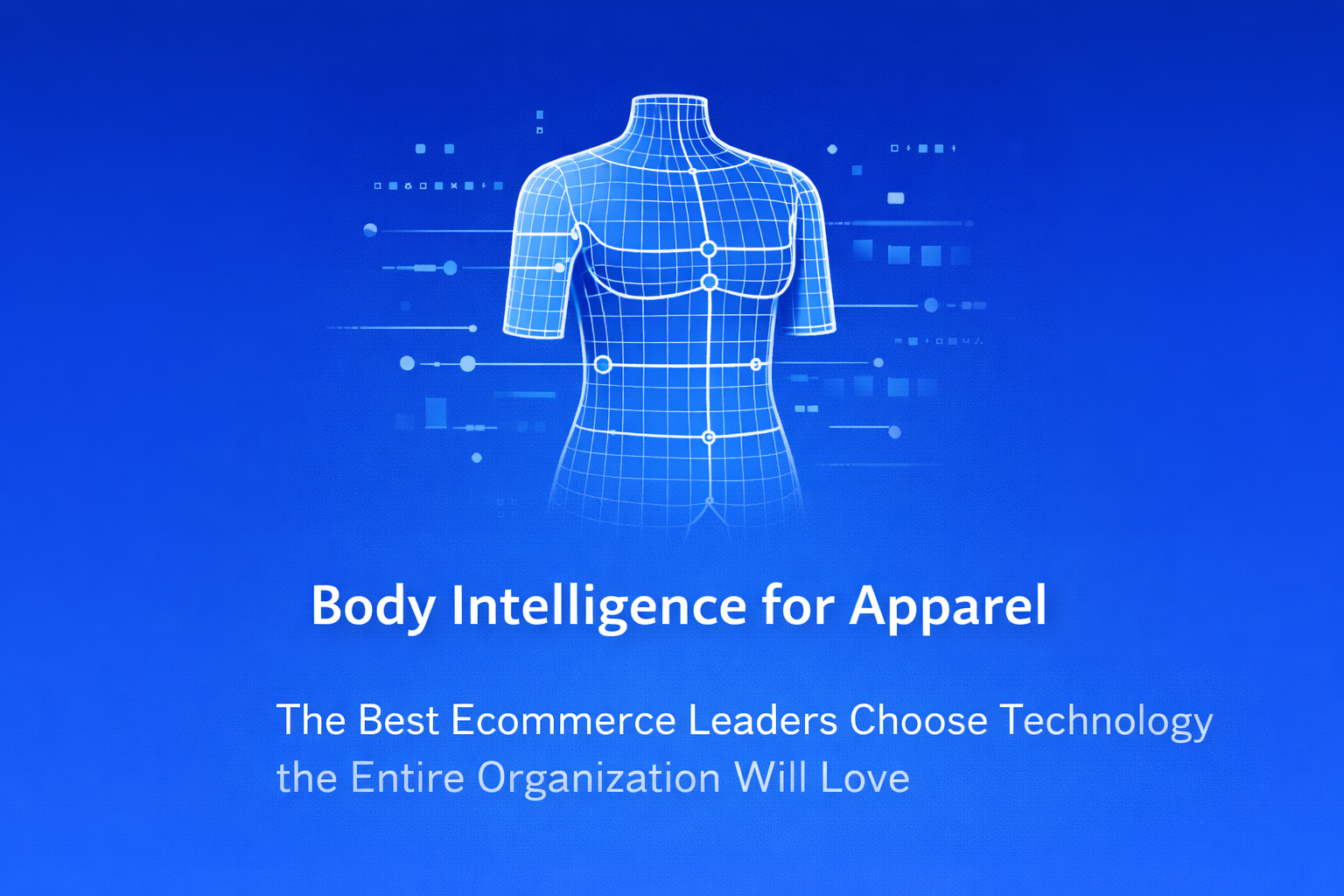
The Best eCommerce Leaders Choose Technology that Helps the Entire Organization
The Best Ecommerce Leaders Choose Technology That Helps the Entire Organization
Most ecommerce leaders are evaluated on a familiar set of metrics: conversion rate, revenue per session, average order value, and return rate. When new technology is introduced to the stack, it is usually justified by how it improves those numbers.
But the most effective ecommerce leaders think one step further.
They look for technology that not only improves ecommerce performance, but also creates value for the rest of the organization. When the right systems are put in place, the data generated by ecommerce can become incredibly valuable to teams across product design, merchandising, planning, and marketing.
One of the most overlooked examples of this opportunity is size and fit.
Size and Fit Is More Than an Ecommerce Problem
For most apparel brands, size and fit shows up in ecommerce through two visible problems: shoppers struggling to choose the right size and the resulting returns that follow.
Technologies like size recommendation tools help address this by giving shoppers more confidence when selecting a size. When implemented well, brands typically see measurable improvements in conversion rates and reductions in size-related returns.
But that is only the first layer of value.
Every time a shopper interacts with a size recommendation system, they are providing information about their body. Over time, this creates a dataset that most apparel companies have never had access to before: the actual body dimensions of their customers.
This is where the opportunity becomes much bigger than ecommerce.
The Data Most Apparel Brands Have Never Had
Apparel companies are incredibly sophisticated when it comes to data about behavior. They know how customers browse, which marketing campaigns drive traffic, which products convert, and how often items are returned.
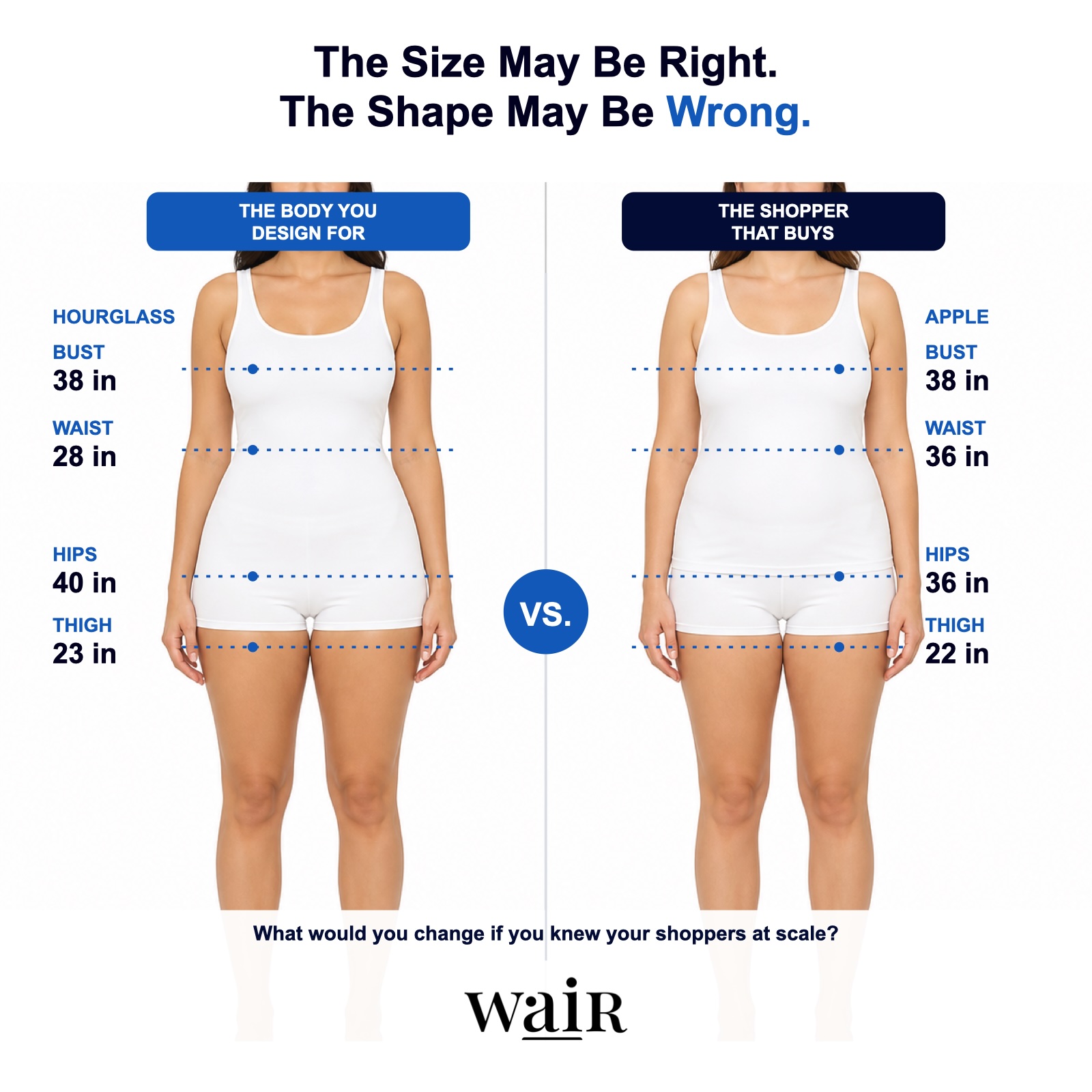
But there is one thing they typically do not know: what their customers physically look like.
Most brands still rely on outdated assumptions when designing size runs and grading garments. Product teams often work from historical fit models or generalized industry standards. Merchandising teams estimate size curves based on previous seasons. Marketing teams build campaigns around demographics and behavior, not physical characteristics.
In other words, many apparel decisions are made without visibility into the actual bodies of the customers buying the product.
When brands begin collecting anonymized body dimension data from their shoppers, that gap starts to close.
When Ecommerce Data Becomes Business Intelligence
The real power of this data is not just in helping an individual shopper choose the right size. It is in helping the entire organization make better decisions.
Product design teams can begin to see how their garments align with the body dimensions of the customers actually purchasing their products. Instead of guessing whether a size run adequately covers their audience, they can see the distribution directly.
Merchandising and planning teams gain insight into whether their inventory allocation matches the body profiles of their shoppers. This can highlight where demand exists for sizes that are underrepresented in production.
Marketing teams can better understand the physical characteristics of their audience and how different body profiles interact with different products.
What begins as an ecommerce optimization tool can evolve into a new category of business intelligence.
A Strategic Advantage That Compounds Over Time
There is another reason this data is so valuable: it compounds.
The longer a brand collects body data from its shoppers, the more accurate and useful the insights become. Patterns emerge around fit coverage, size demand, return behavior, and customer segmentation.
Over time, this dataset becomes a strategic asset.
Brands that begin capturing this information earlier develop a deeper understanding of their customers and their products. Those insights can influence product development, merchandising strategies, and marketing decisions for years to come.
In contrast, brands that delay often find themselves wishing they had started collecting this data sooner.
The Opportunity for Ecommerce Leaders
For ecommerce leaders, this creates a unique opportunity.
You can introduce technology that directly improves the metrics your team is responsible for today: higher conversion rates, fewer size-related returns, and increased revenue per session.
At the same time, you can begin generating insights that product, merchandising, and marketing teams will find incredibly valuable.
In many organizations, ecommerce is already one of the most data-rich parts of the business. The next evolution is turning that data into intelligence that benefits the entire company.
The best ecommerce leaders recognize this shift early.
They choose tools that not only improve the performance of their channel, but also create knowledge that helps the rest of the organization make smarter decisions.
And sometimes the most powerful data you can capture is also the simplest: understanding the bodies of the customers you serve.


Want to be notified of our newest episodes?
Subscribe to our Podcast!