Why Your Best Marketing Campaigns May Be Driving Returns
Why apparel brands are optimizing the wrong lever
Most brands treat returns as an operational issue. They focus on return policies, reverse logistics, and what happens after a product is purchased. But by the time a product is sent back, the real problem has already occurred.
Returns are not the root issue. They are the final signal.
To understand what is really driving returns, you have to look upstream. And when you do, a less obvious but far more impactful driver starts to emerge.
Your marketing may be attracting shoppers your products were never designed to fit.
Apparel Design Is Built Around a Specific Body
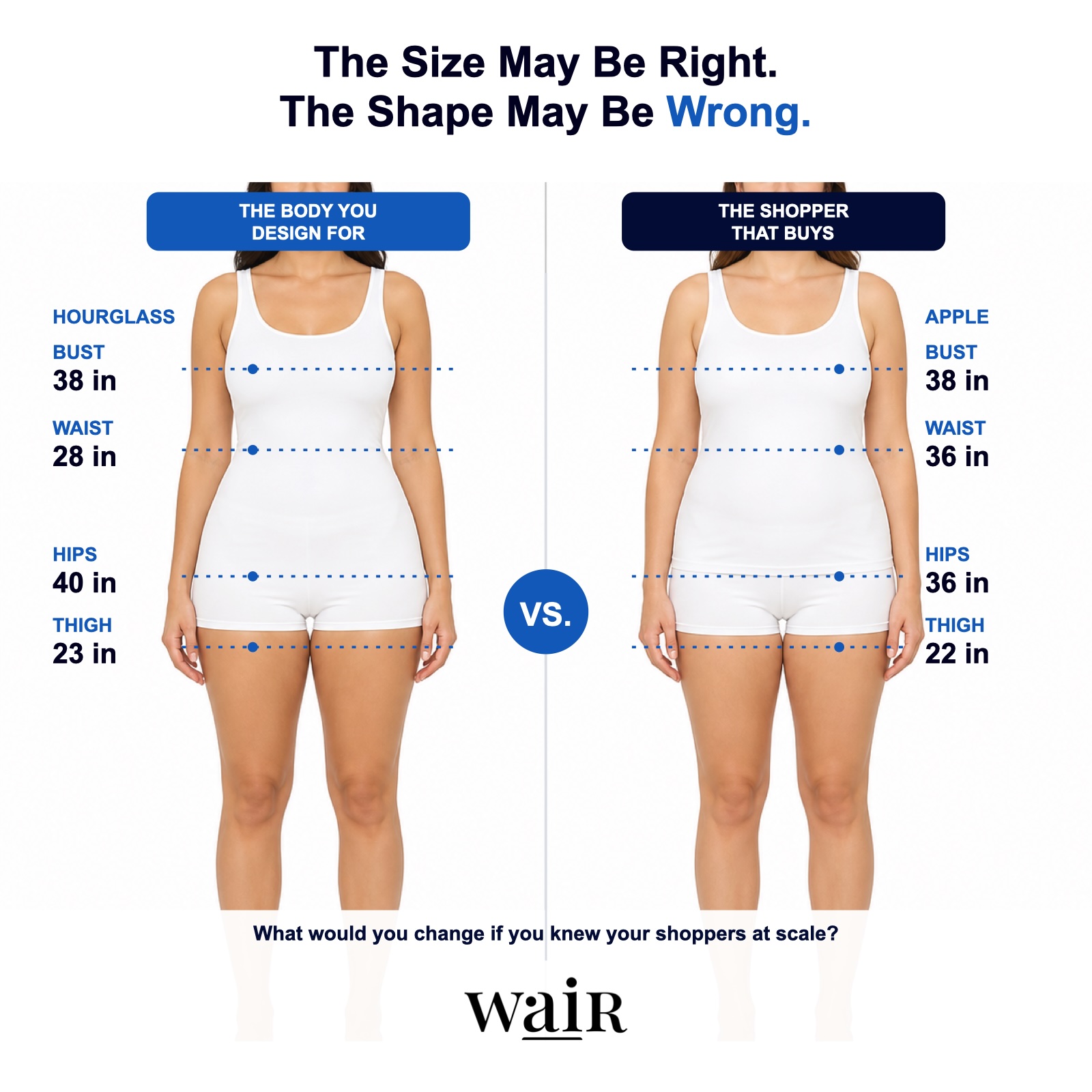
Every apparel brand is built around a specific set of assumptions about the human body. Design teams choose a fit model and develop patterns based on that body. From there, garments are graded up and down to create a full size run. While sizes change, the underlying structure remains consistent.
A medium is not just a larger small. It is a scaled version of a core body shape that defines how the product is intended to fit.
This process is deliberate, but it also creates a constraint. Your entire product line is optimized for a particular body shape and proportion set. Changing that foundation is not easy. Adjusting fit models, reworking patterns, and updating grading rules is a multi-season effort that touches design, production, and inventory.
Design is slow, expensive, and difficult to change.
Marketing Moves Fast. And That’s the Problem.
Marketing operates very differently. Paid media campaigns evolve constantly. New audiences are tested, creatives are refreshed, and algorithms optimize toward performance metrics like clicks and conversions.
Platforms like Meta are highly effective at finding people who engage with your brand, but they are not optimizing for fit alignment.
They optimize for:
- Clicks
- Conversions
- Cost efficiency
They do not optimize for:
- Body shape alignment
- Fit accuracy
- Return risk
Meta finds people who will buy. It does not find people your products were designed to fit.

When Traffic and Fit Don’t Align
This is where the disconnect begins. Your marketing performs well, traffic increases, and orders come in. On the surface, everything looks healthy.
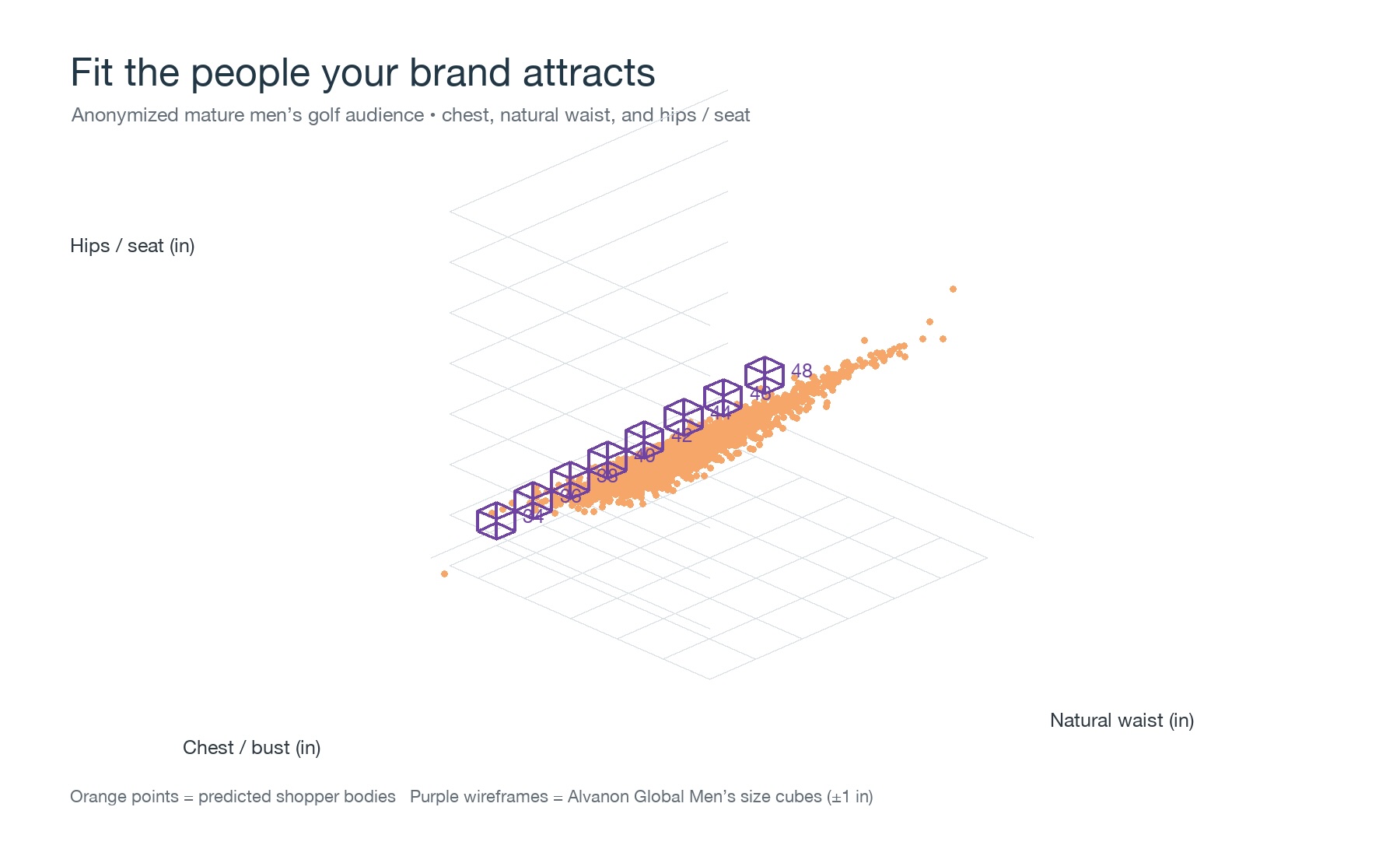
But underneath, a mismatch is forming. You are attracting shoppers whose body shapes do not align with your product’s fit model.
Those shoppers still convert because they like your brand. But when they receive the product, something feels off. No size fits quite right. So they return it.
Returns are the downstream result of upstream misalignment.
Why Most Brands Can’t See This
The reason this problem persists is simple. Most brands do not have visibility into the body shapes behind their traffic.
They can see:
- Campaign performance
- Conversion rates
- Return rates
But they cannot see:
- What body shapes are coming from each campaign
- Which audiences align with their fit model
- Which segments are driving high return risk
Without that visibility, every decision becomes a guess. Marketing continues to optimize for surface-level performance, while design continues to operate on historical assumptions.
You can’t optimize what you can’t see.
The Strategic Opportunity
The opportunity is not to overhaul your design strategy overnight. That is neither practical nor necessary.
The opportunity is to align your marketing with the design strategy you already have.
Because while design is difficult to change, marketing is highly flexible.
You can:
- Shift audience targeting
- Adjust creative to better reflect fit
- Optimize campaigns toward better-fit shoppers
- Reduce spend on high-return-risk audiences
Design is hard to change. Marketing is not.
The Missing Data Layer
To make this shift, you need a new layer of data. Not just demographics or purchase behavior, but actual body measurements tied to shopping activity.
When you can connect:
- Body shape
- Campaign source
- Purchase behavior
- Return outcomes
You unlock a completely different level of insight.
You can finally answer:
- Which campaigns are driving high-return-risk shoppers?
- Which audiences align with your fit model?
- Where is your marketing spend generating profitable customers vs. costly returns?
WAIR is the missing link between marketing performance and product reality.
From Guessing to Alignment
This is where WAIR comes in.
WAIR’s Body Intelligence Layer predicts shopper body measurements and connects that data directly to ecommerce performance. It allows brands to understand the relationship between who they are attracting and how their products actually fit those shoppers.
With that visibility, brands can move from guessing to aligning.
Instead of optimizing purely for conversion, they can optimize for:
- Profitable conversion
- Lower return rates
- Better customer experiences
Over time, this leads to higher margins, stronger performance, and a more efficient growth model.
The Bottom Line
Your returns problem is not just a returns problem.
It is a misalignment problem.
Your products are designed for a specific body. Your marketing is bringing in a wide range of bodies. When those two do not match, returns are inevitable.
The brands that win will not be the ones that simply manage returns better.
They will be the ones that align:
- Who they attract
- With what they have built
Because in apparel ecommerce:
Fit is not just a product decision.
It is a marketing decision.


Want to be notified of our newest episodes?
Subscribe to our Podcast!