WAIR vs. TrueFit vs. Bold Metrics vs. Fit Analytics vs. Size Bay
Online sizing has become one of the biggest problems in apparel eCommerce. When shoppers are unsure about fit, they hesitate. When they hesitate, conversion drops. When they guess, returns go up. And when they buy multiple sizes to try at home, brands pay for that uncertainty through shipping, reverse logistics, margin loss, inventory distortion, and customer support costs.
That is why the fit technology category exists. Platforms like WAIR, True Fit, Fit Analytics, Bold Metrics, and Sizebay have helped move apparel brands beyond static size charts and toward more personalized sizing experiences.
But not all fit technology works the same way.
Some platforms rely heavily on purchase and return behavior. Some use machine learning models trained on shopper inputs, sales records, returns data, and body scan databases. Some focus on predicted body measurements or digital twins. Others emphasize virtual fitting room experiences that help shoppers visualize fit or select a size based on basic body inputs.
WAIR is different because it is built around a deeper question.
Not just: “What size should this shopper buy?”
But also: “How did this shopper want the product to fit, what did they actually buy, and did the product meet their expectations?”
That difference matters because fit is not only a measurement problem. It is an expectation problem.
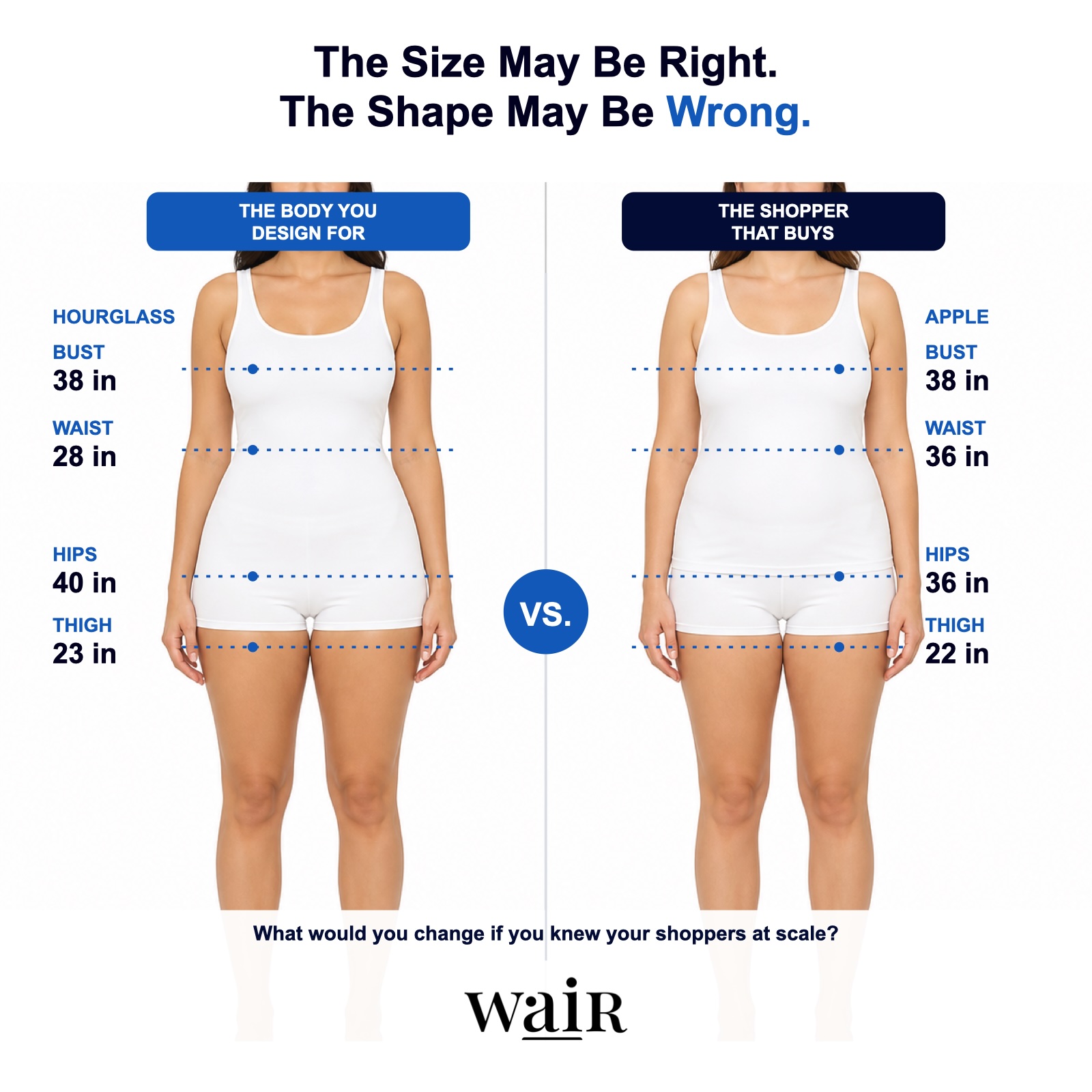
Two shoppers can have similar bodies and want very different outcomes. One may want a relaxed fit. Another may want something more tailored. One shopper may accept a snug waist if the product fits well through the hip. Another may return the same item for that exact reason.
Traditional purchase and return data can tell a brand what happened. It can show that a shopper bought a medium, exchanged for a large, or returned the item altogether. But it does not always explain why. Did the shopper want the item to fit loosely and it arrived too fitted? Did the shopper intentionally size down for a tighter look? Did the product fit correctly according to the size chart, but fail against the shopper’s expectation?
That is where WAIR stands apart.
WAIR closes the loop after purchase by surveying shoppers to understand what they bought, how they wanted it to fit, and whether the product met that expectation. This creates a fit intent feedback loop that goes beyond basic size prediction.
WAIR is not only learning from fit outcomes. WAIR is learning from shopper fit intent.
That gives apparel brands a more complete view of fit performance. It helps brands understand not only what size was recommended, purchased, kept, or returned, but whether the product delivered against the shopper’s desired fit experience.
This is especially important because “good fit” is not universal. It depends on the product, the category, the brand promise, the shopper’s body, and the shopper’s personal preference. A fitted dress, a relaxed hoodie, a performance jogger, and a tailored shirt all create different expectations. A recommendation engine that only looks at body size or return behavior may miss the preference layer that explains whether the shopper actually got what they wanted.
WAIR is also powered by a major body data advantage.
WAIR’s body prediction is supported by Fit3D’s proprietary 3D body scan database, which includes more than 5.5 million 3D body scans from owned scanners across 80+ countries, with more than 400 points of measurement per scan. This gives WAIR access to a large, modern, global body dataset built from real 3D scans.
That matters because body prediction models are only as strong as the data behind them.
Many apparel and anthropometric models have historically relied on much smaller datasets. CAESAR, one of the most well-known civilian anthropometric datasets, includes measurements from more than 4,000 individuals. ANSUR II includes 93 measurements from just over 6,000 U.S. Army personnel. Size NorthAmerica includes more than 18,000 people scanned across the U.S. and Canada.
Those datasets have value. They have helped inform product design, ergonomics, apparel sizing, and body measurement research for years. But they are relatively small compared to Fit3D’s body scan database, and some are limited by geography, time period, population type, or use case.
For WAIR, this creates an important technical foundation. The platform is not only making recommendations from simple shopper inputs. It is informed by a large-scale body dataset, product-level fit data, shopper behavior, and post-purchase fit intent feedback.
That combination is rare.
True Fit’s public materials emphasize shopper behavior, product data, purchase history, return history, and cross-brand fit relationships. True Fit describes its model as using large-scale sales and returns data from global retailers, along with profile data, to understand how shoppers buy and engage with brands and sizes.
Fit Analytics describes its Fit Finder as using machine learning to generate size and fit recommendations based on shopper preferences, sales and returns records, and a database of body scans.
Bold Metrics emphasizes AI body data, digital twins, and predicted body measurements. Its public materials describe creating a digital twin for each shopper and mapping more than 50 body measurements to support style-by-style size recommendations.
Sizebay describes a virtual fitting room experience where shoppers provide body inputs such as height, weight, and age, validate body mass distribution, and use anthropometric algorithms to estimate body measurements and guide size selection.
WAIR’s difference is that it connects three critical layers: body prediction, product-level fit recommendation, and post-purchase fit intent.
That creates a stronger feedback loop for apparel brands.
For ecommerce teams, WAIR helps reduce size hesitation at the point of purchase. For merchandising and inventory teams, WAIR can help reveal whether the size curve being bought actually matches the size curve shoppers need. For product teams, WAIR can highlight where fit issues are concentrated by product, size, body shape, or fit expectation. For customer support teams, WAIR can reduce repetitive sizing questions by giving shoppers a clearer answer directly on the product page.
Most importantly, WAIR helps brands understand fit performance in a more human way.
A shopper does not experience fit as a data model. They experience it as confidence or uncertainty. They wonder whether the item will feel right, look right, and fit the way they want it to fit. WAIR is built to answer that question before purchase and then learn from the shopper after purchase.
That is why WAIR is more than a size recommendation tool. It is a body intelligence platform that helps apparel brands understand the relationship between body, product, preference, expectation, and outcome.
Size charts cannot do that. They assume shoppers know their measurements, understand how the brand defines fit, and can translate body dimensions into a confident purchase decision. Most shoppers cannot do that consistently.
Even many modern fit tools only solve part of the problem. They may help predict a size, but they may not help the brand understand whether that recommendation matched the shopper’s intended fit experience.
WAIR gives shoppers a simple recommendation and gives brands a deeper understanding of what happened after the recommendation.
The future of apparel ecommerce will not be won by brands with better size charts. It will be won by brands that understand their shoppers better than their competitors.
That is where WAIR stands apart.
WAIR helps apparel brands increase revenue, reduce returns, and make smarter decisions across ecommerce, merchandising, inventory, product, and customer support.
When shoppers feel confident, they buy. When brands understand why fit works or fails, they get better. WAIR connects those two outcomes in one platform.


Want to be notified of our newest episodes?
Subscribe to our Podcast!